
EV-Ready Buildings Are Moving From Optional Upgrade to Integrated Infrastructure
By Frank Chang, TerraFuse Market Recap | June 19, 2026
EV-ready buildings are no longer just about installing a few chargers in a car park.
This week’s market signals across solar, battery energy storage systems, EV charging, commercial energy procurement, strata electrification and smart parking technology point to one practical conclusion: property stakeholders need to plan building infrastructure as an integrated system.
For strata managers, building managers, facility managers, developers and owners corporations, the opportunity is not only to respond to resident or tenant demand. It is to prepare buildings for a future where energy, mobility and parking operations increasingly overlap.
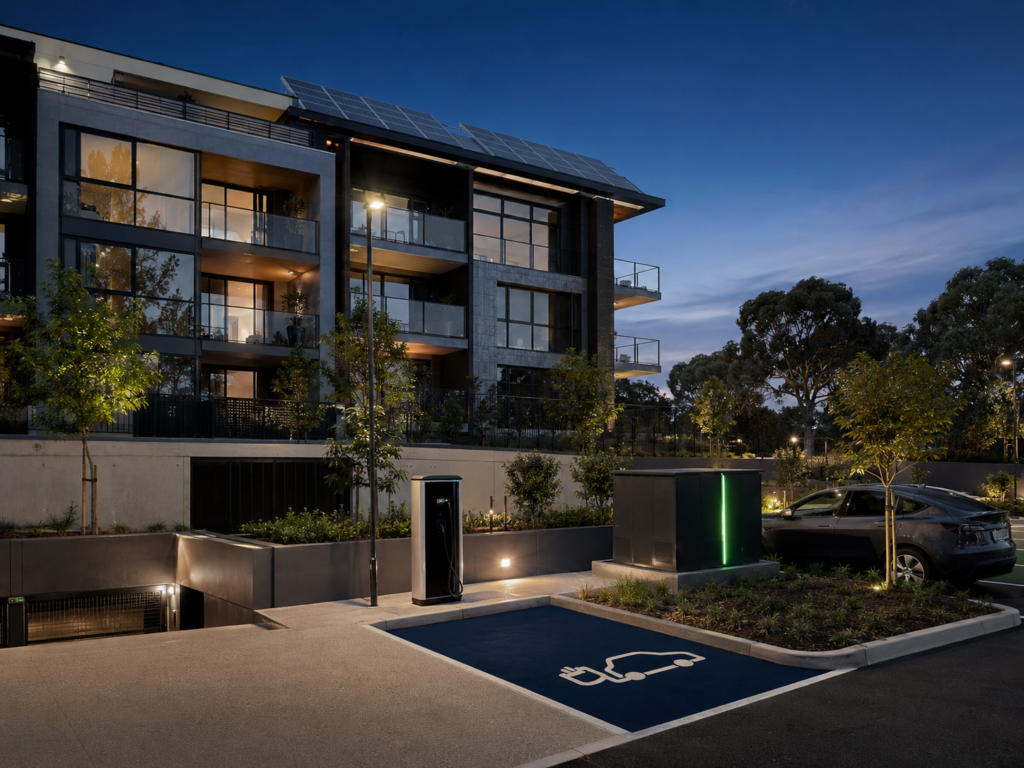
1. Queensland: Large-Scale Solar and Battery Projects Reinforce the Grid-Readiness Theme
Queensland continues to show strong momentum in solar-plus-storage infrastructure.
The latest market activity points to the continued growth of large hybrid renewable projects, where solar generation is paired with battery energy storage to improve flexibility, reliability and the timing of renewable energy use.
For property stakeholders, the lesson is simple: the same principle applies at building level.
EV charging infrastructure should not be treated as a standalone electrical upgrade. Buildings should consider how solar, battery storage, load management, metering and parking operations can work together before demand becomes urgent.
TerraFuse implication:
Queensland strata and commercial properties should begin with an EV-readiness and electrical-capacity assessment before approving ad hoc charger installations. Early planning helps reduce future retrofit costs and creates a clearer pathway for solar, battery and smart parking integration.
Recommended action:
Prioritise site assessments for apartment buildings, mixed-use assets and commercial car parks where resident, visitor or fleet charging demand is likely to rise over the next two to five years.
2. NSW: Energy Affordability, EV Access and Strata Electrification Are Converging
NSW is showing a strong link between clean energy affordability, EV adoption and building infrastructure.
Recent signals include household energy upgrade support, continued focus on EV charging access, and growing attention on battery-backed energy platforms. These developments reinforce the idea that electrification is moving from an environmental conversation into a cost-of-living, resilience and infrastructure planning conversation.
For strata and apartment buildings, this matters because many residents cannot easily install home charging without owners corporation approval, shared electrical planning and fair usage billing.
TerraFuse implication:
NSW buildings should prepare clear EV charging policies, resident request pathways and infrastructure upgrade plans. Buildings that wait until multiple residents request chargers may face rushed decisions, capacity constraints and avoidable disputes.
Recommended action:
For NSW owners corporations and strata committees, combine EV charging discussions with broader building energy planning, including solar potential, battery storage, visitor parking control and future electrical-load management.
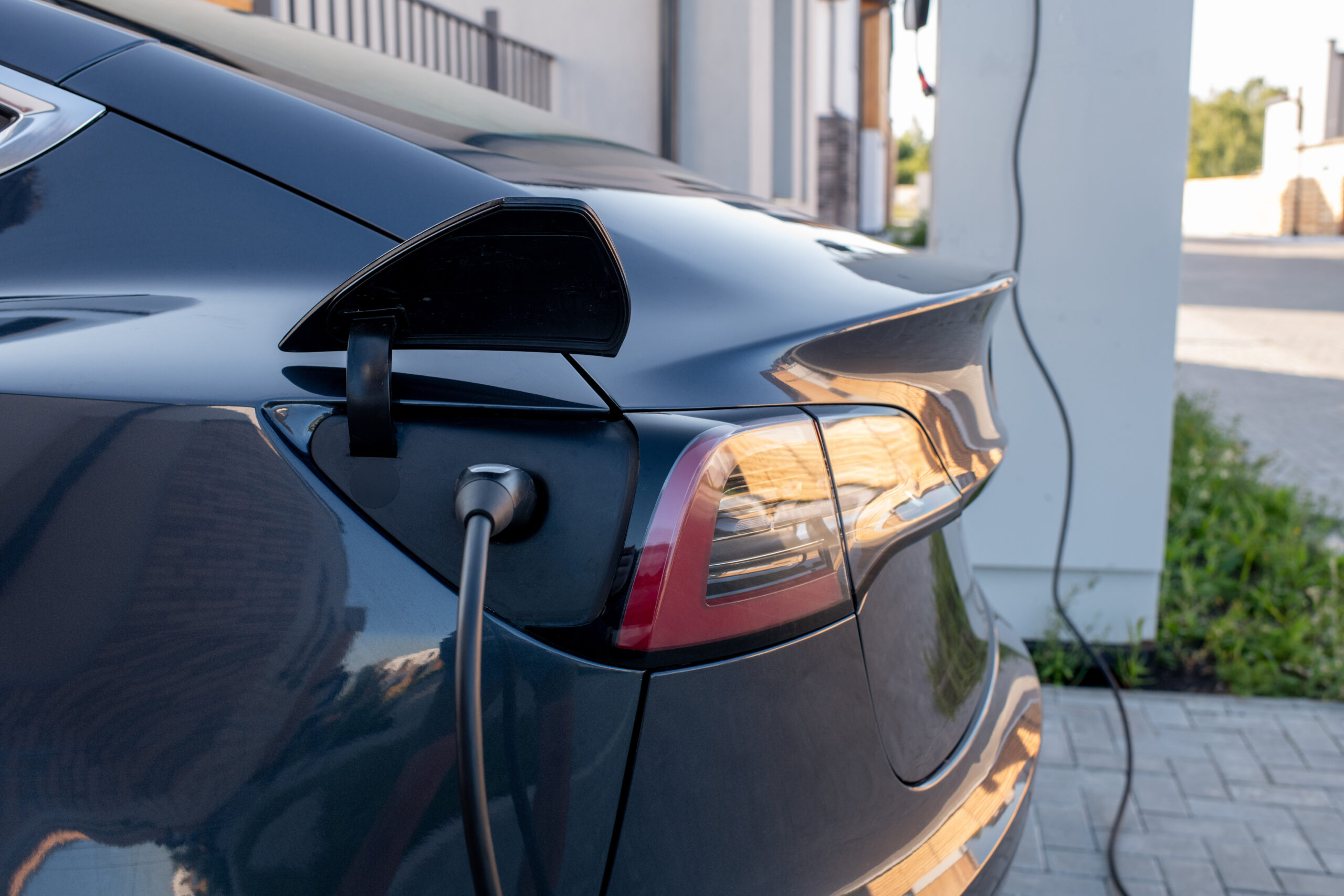
3. Victoria: Apartment EV charging is moving from concept to reality
Victoria continues to attract major solar and battery storage investment, including large hybrid projects designed to pair renewable generation with long-duration energy storage.
This reflects a broader market shift: solar value is increasingly tied to how well energy can be stored, managed and consumed at the right time.
At property level, the same issue appears in a practical form. Exporting solar to the grid is not always the highest-value pathway. Buildings that can use solar energy on site — including for EV charging, shared services, common-area loads or future battery systems — may be better positioned over time.
TerraFuse implication:
Victorian strata and commercial buildings should assess whether EV charging can become part of a broader self-consumption strategy, not just a resident amenity.
Recommended action:
For new developments and major refurbishments, include EV charging pathways, solar capacity, battery options and load-management infrastructure in the early design phase.
4. Other Australian States: Community Batteries and Local Network Infrastructure Are Becoming More Important
Western Australia’s community battery rollout highlights another important trend: energy infrastructure is becoming more local, distributed and network-aware.
Community batteries are designed to help manage rooftop solar, support local networks and shift renewable energy into higher-value times of day. For property stakeholders, this reinforces the same direction of travel: buildings and precincts will increasingly need to participate in more flexible, distributed energy systems.-duration energy storage.
TerraFuse implication:
Buildings that prepare early for managed loads, shared infrastructure and digital control systems will be better positioned as energy networks become more dynamic.
Recommended action:
For building owners and managers, avoid piecemeal upgrades that solve only one immediate problem. Instead, map the future pathway for EV charging, visitor parking management, embedded energy, batteries and common-area loads.
5. Australia-Wide: Solar and Battery Growth Is Reshaping the Grid
Nationally, record solar and battery growth continues to reshape how electricity is generated, stored and used.
The key message for property stakeholders is that energy timing now matters. Solar generation is abundant during parts of the day, while evening peaks and EV charging demand create new pressure points. Batteries and smart load management help bridge that gap.
This is directly relevant to apartment buildings, commercial assets and mixed-use sites. As EV adoption grows, unmanaged charging can create electrical strain and unfair cost allocation. Managed charging, metering, billing and clear parking policies become essential.
TerraFuse implication:
EV-ready planning should include electrical capacity, dynamic load management, user billing, access control, visitor parking rules and future solar/battery integration.
Recommended action:
Position EV charging as part of a long-term building-readiness strategy rather than a one-off resident request.
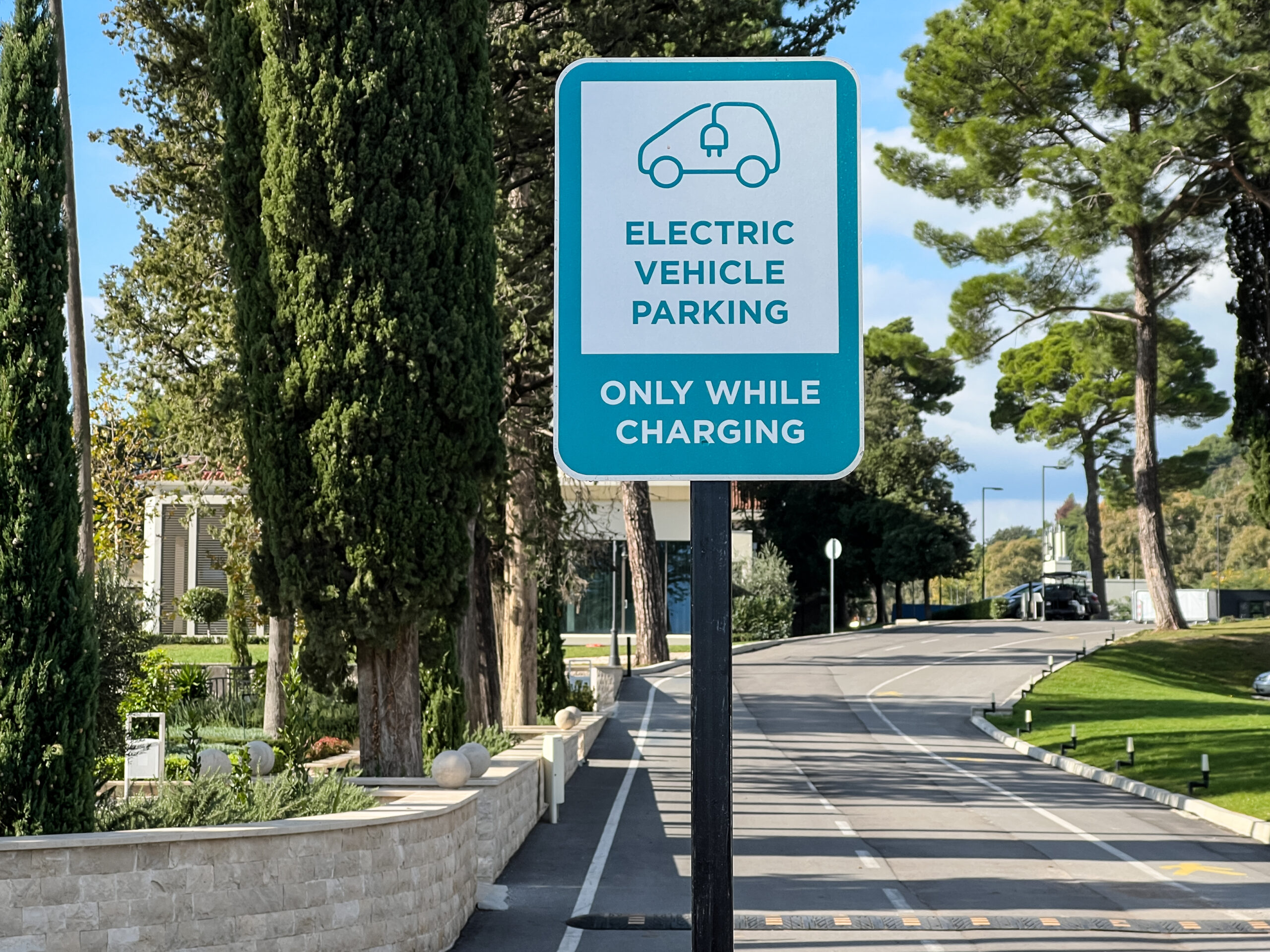
6. Global Signals: Storage Innovation and EV Policy Volatility Reinforce the Need for Flexible Planning
Globally, the storage and EV sectors remain active but uneven.
Battery suppliers continue to showcase new commercial, industrial and residential energy storage solutions. At the same time, policy shifts in major EV markets show that investor confidence can be affected when governments change direction.
For Australian property stakeholders, the practical takeaway is not to wait for perfect policy certainty. The direction of travel remains clear: buildings will need better electrical infrastructure, smarter energy management and more flexible parking and charging systems.
TerraFuse implication:
A flexible, staged EV-readiness plan reduces risk. Buildings do not need to install every charger immediately, but they should avoid decisions that make future expansion harder or more expensive.
Recommended action:
Use staged infrastructure planning: assess, design, prepare backbone infrastructure, implement controlled charging, then expand as demand grows.
Conclusion
This week’s market signals all point in the same direction: EV-ready buildings are becoming integrated infrastructure.
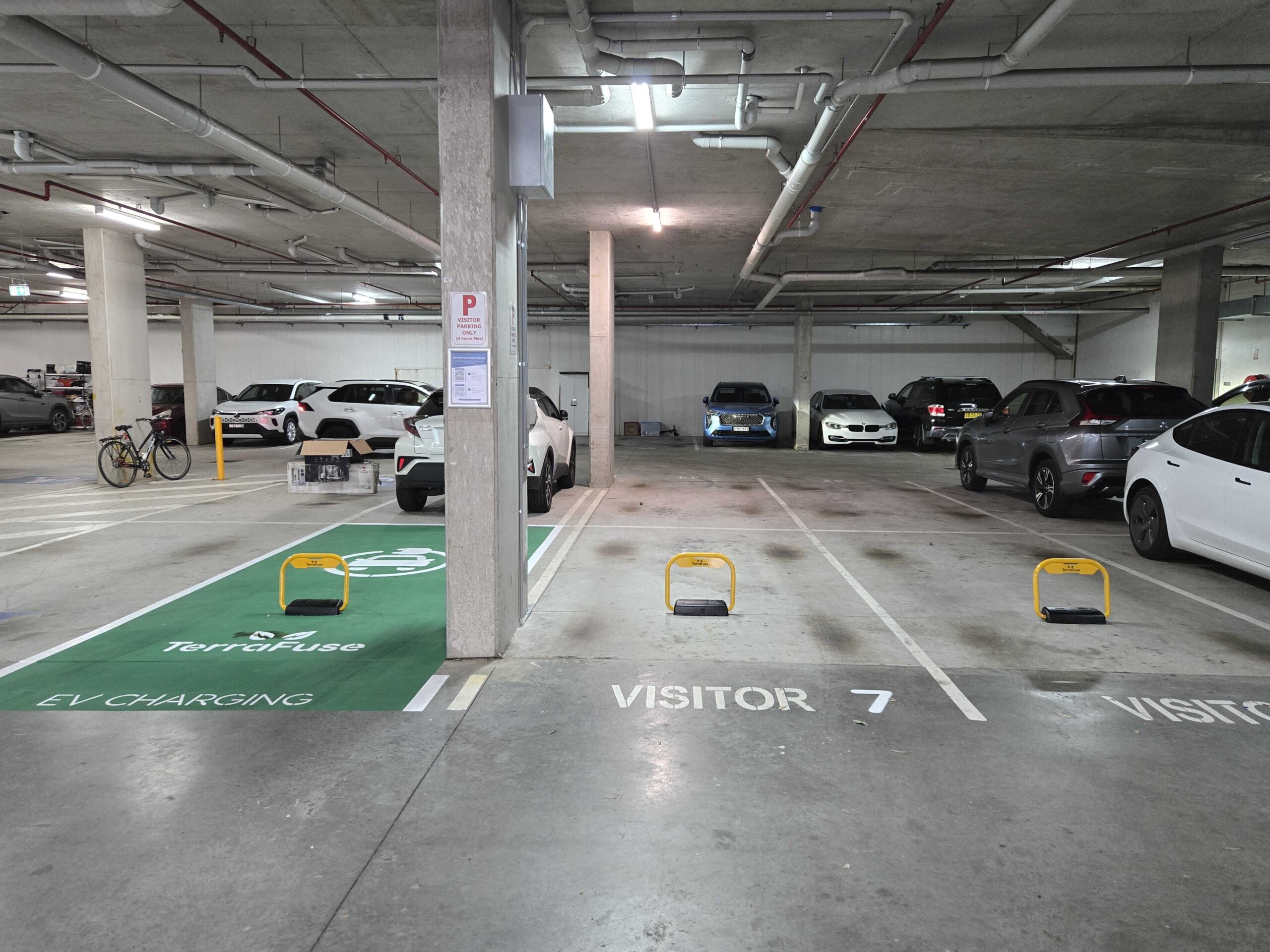
Solar, batteries, EV charging, smart parking, visitor parking control and energy management are no longer separate conversations. For strata committees, building managers, facility managers, developers and property owners, the best time to plan is before demand becomes urgent.
TerraFuse helps property stakeholders assess building readiness, plan scalable EV charging infrastructure and connect charging strategy with broader energy and parking requirements.
References
- Clean Energy Regulator — Record battery and solar growth reshaping energy grid
- PV Tech — Lightsource bp begins construction on Queensland Lower Wonga solar-plus-storage project
- NSW Government / media reporting — NSW Home Energy Saver Program and EV access initiatives
- Energy-Storage.News — NSW Energy Security Corporation battery storage platform investment
- Gamuda — Hazelwood North Solar Farm and BESS project in Victoria
- Energy-Storage.News — Western Power community battery rollout in Western Australia
- Business Renewables Centre Australia / ERM — Corporate renewable PPA market tracking
- WHES — Intersolar Europe 2026 advanced ESS solutions announcement
- Enphase Energy — Intersolar Europe 2026 product innovation announcement
- The Guardian — UK EV target policy debate and industry response