
EV-Ready Buildings Now Need Smarter Energy, Parking and Load Management
By Frank Chang, TerraFuse Market Recap | June 26, 2026
EV charging is no longer just a question of where to install a charger.
Across Australia and globally, this week’s clean energy signals show a bigger shift: solar, batteries, EV charging, visitor parking, user billing, access control and load management are becoming connected building infrastructure decisions.
For strata managers, owners corporations, building managers, facility managers, developers and property stakeholders, the practical takeaway is clear. Buildings that plan early can avoid ad hoc upgrades, reduce future disruption and create a more scalable pathway for electrification.
1. Queensland: Solar and Battery Projects Reinforce the Case for Building-Level Energy Planning
Queensland continues to show strong momentum in large-scale solar and battery energy storage.
Recent project activity points to the ongoing growth of hybrid renewable infrastructure, including solar farms paired with large battery storage systems. These projects are designed to store renewable energy and release it when needed, improving flexibility and helping the grid manage changing demand.
The same principle applies at building level.
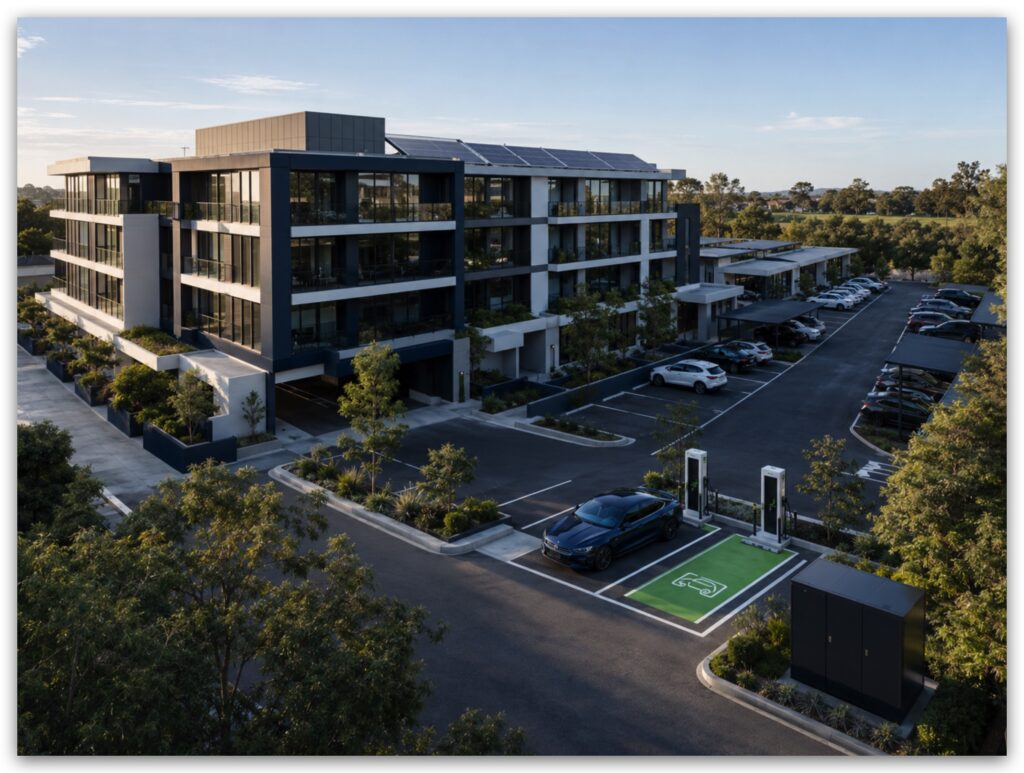
Apartment buildings, mixed-use sites and commercial car parks should not treat EV charging as a standalone electrical upgrade. Charging demand will increasingly interact with solar generation, battery storage, common-area loads, visitor parking and future resident expectations.
TerraFuse implication:
Queensland buildings should assess EV charging readiness before multiple residents or tenants begin making individual requests. Early planning helps identify electrical capacity, switchboard constraints, charger locations, visitor parking impacts and future expansion requirements.
Recommended action:
Prioritise EV-readiness and electrical-capacity assessments for apartment buildings, mixed-use properties, commercial car parks and sites where resident, visitor or fleet charging demand is likely to grow.
2. NSW: Strata EV Charging Pressure Is Moving From Policy to Practical Risk
NSW remains one of the most important markets for strata electrification.
Recent strata commentary has highlighted a practical issue for owners corporations: the first EV charging request may be manageable, but unmanaged approvals can create future capacity, fairness and governance problems once more residents request charging access.
This is where strata electrification becomes an operational issue, not just a sustainability issue. Buildings need a process for handling resident requests, assessing available capacity, allocating costs fairly and preventing one early decision from creating complications later.
TerraFuse implication:
NSW owners corporations should avoid approving EV chargers one by one without a broader building plan. The risk is not the first charger. The risk is reaching the fifth, tenth or twentieth request without a clear infrastructure pathway.
Recommended action:
Prepare an EV charging policy and infrastructure roadmap that covers electrical capacity, dynamic load management, user billing, approval workflows, fire and safety considerations, visitor parking, and future solar or battery integration.
3. Victoria: Big Battery Momentum Shows Why Storage and Flexibility Matter
Victoria continues to demonstrate the importance of battery storage in the energy transition.
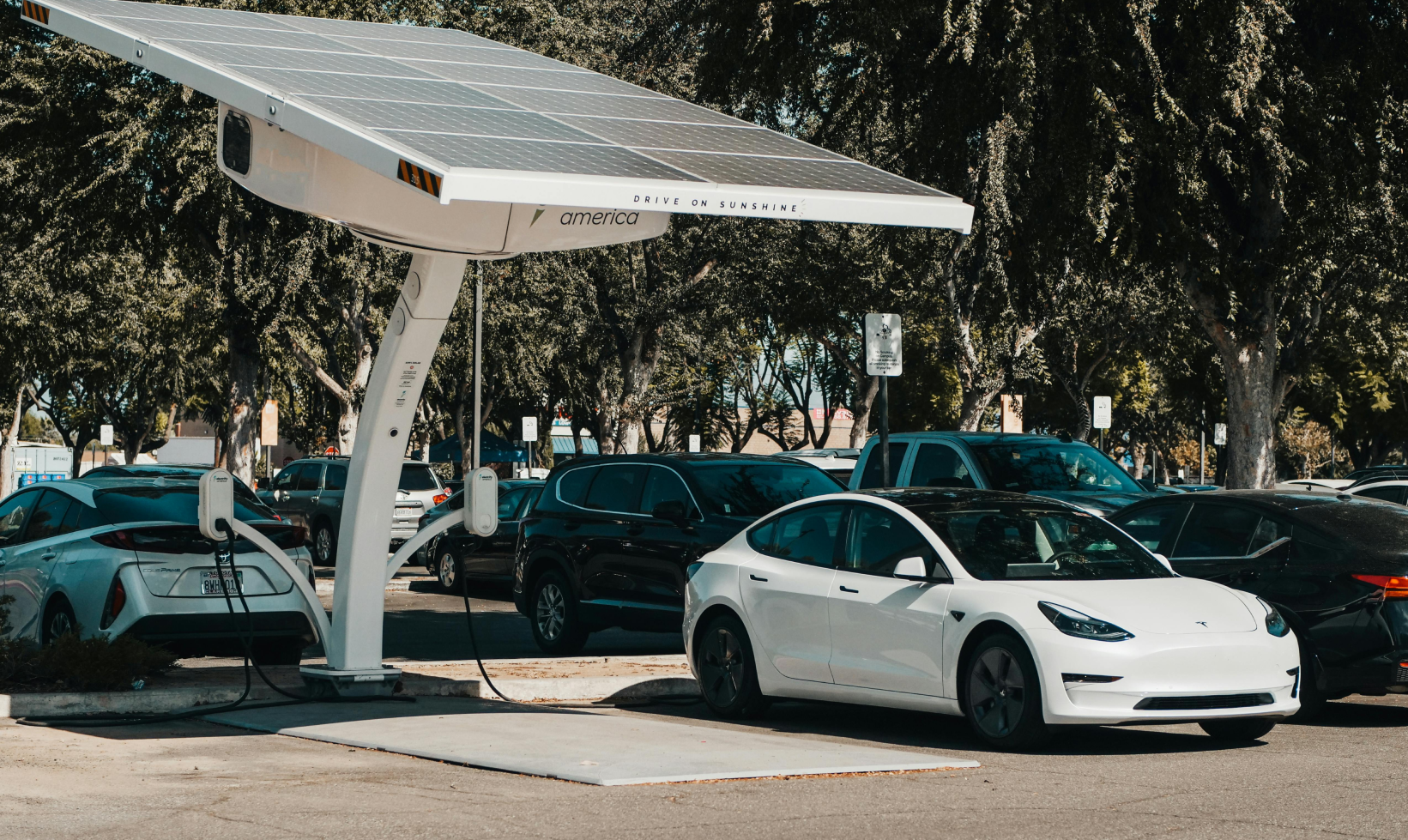
Recent reports of further large-scale battery planning near Moorabool reinforce the role of storage in supporting grid reliability, renewable integration and price stability. At the same time, community-level battery and EV charging projects in Melbourne show how storage and charging can increasingly appear together in local infrastructure.
For building owners and managers, the message is practical: energy flexibility is becoming valuable.
A building that can manage when EVs charge, how loads are shared and how future solar or battery systems may connect will be better positioned than a building that simply adds chargers wherever capacity appears to exist.
TerraFuse implication:
Victorian strata and commercial buildings should treat EV charging as part of a staged infrastructure plan. Load management, access control and future storage compatibility should be considered before major works are approved.
Recommended action:
For new developments, refurbishments and major car park upgrades, include EV charging backbone design, solar readiness, battery options and managed parking controls in the early planning stage.
4. Other Australian States and Territories: Smart Parking and Local Charging Access Are Becoming More Important
Across Australia, parking is becoming a technology and governance issue.
Visitor parking misuse, short-stay accommodation, access control, resident complaints and unclear enforcement pathways are already common pain points in strata and apartment buildings. At the same time, EV charging demand adds a new layer of complexity to shared parking areas.
This creates a clear opportunity for buildings to think about car parks as managed assets.
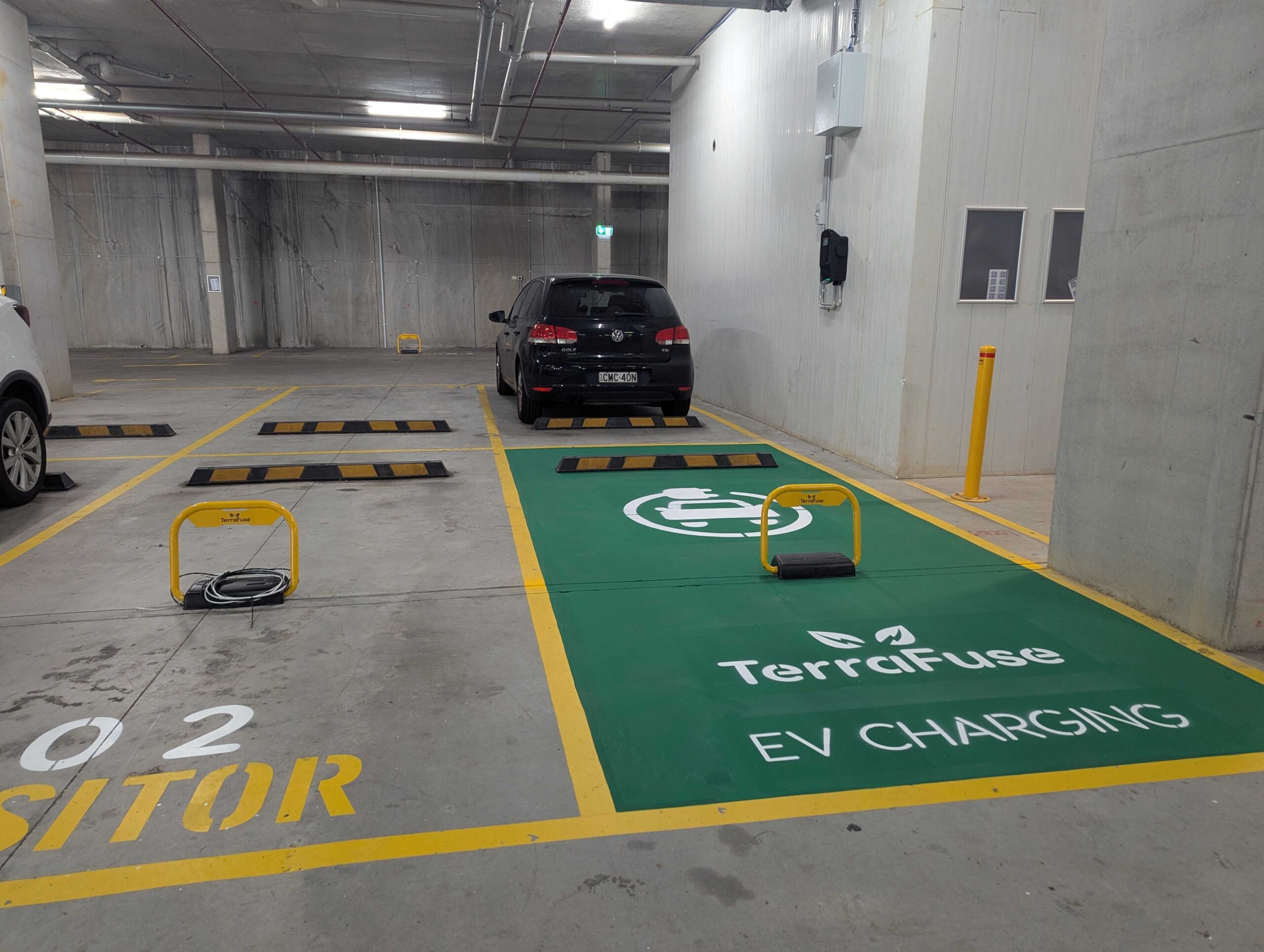
Visitor bays, resident bays, EV charging bays, access controls, bookings, enforcement records and charging permissions should not operate in separate silos. As more buildings prepare for electrification, smarter parking systems will become part of the EV-readiness conversation.
TerraFuse implication:
Buildings with existing visitor parking issues should solve the parking-control problem before EV charging adds further complexity. Visitor parking management can be the practical first step that opens the conversation about broader car park infrastructure.
Recommended action:
Review visitor parking rules, signage, booking processes, access control, evidence records and enforcement pathways alongside EV charging planning.
5. Australia-Wide: Apartment EV Charging and Distributed Batteries Are Becoming Mainstream Infrastructure
National policy and funding signals continue to support EV charging, batteries and distributed energy.
ARENA-backed apartment charging projects are helping test lower-cost, managed EV charging models for strata buildings. The federal Cheaper Home Batteries Program continues to support battery uptake for households and small businesses. Broader EV infrastructure programs are also supporting public charging and transport electrification.
Together, these signals point to a future where more Australians expect access to charging and more buildings need to manage distributed electrical demand.
For strata and commercial properties, the challenge is not only installing hardware. It is designing a system that can manage billing, access, load, fairness and long-term expansion.
TerraFuse implication:
EV-ready buildings need more than chargers. They need a managed system that brings together infrastructure, governance and user experience.
Recommended action:
Treat EV charging readiness as a building infrastructure project. Start with an assessment, then plan the backbone, charging model, billing method, parking impacts and expansion pathway.

6. Global Signals: Charging Speed, Storage, Cybersecurity and Grid Resilience Are Converging
Global EV and energy storage markets continue to move quickly.
Fast-charging networks are expanding, battery-backed charging is becoming more common, and global debate is increasingly focused on how high-powered charging affects the grid. Recent commentary on ultra-fast charging in Europe highlights an important point: faster charging may be convenient for drivers, but it also creates new grid, storage, control and cybersecurity considerations.
For Australian property stakeholders, the lesson is not to chase the fastest charger in every setting. Apartment buildings and commercial sites need the right charging model for their electrical capacity, user behaviour and long-term infrastructure plan.
TerraFuse implication:
The best EV charging solution for a building is not always the highest-powered charger. In many strata and commercial environments, managed charging, fair billing and scalable infrastructure matter more than speed alone.
Recommended action:
Use the right charging strategy for the site. For apartments, destination parking and long dwell-time car parks, managed charging can be more practical than high-power charging that strains existing infrastructure.
Conclusion
TThis week’s market signals all point in the same direction: EV-ready buildings now need smarter energy, parking and load management.
Solar, batteries, EV charging, visitor parking, access control and user billing are becoming connected infrastructure decisions. Buildings that plan early can reduce future conflict, avoid costly retrofits and provide a clearer pathway for residents, tenants and visitors.
TerraFuse helps strata, commercial and mixed-use properties assess EV readiness, plan scalable charging infrastructure and connect charging strategy with smarter parking and building operations.
References
- PV Magazine Australia — “Edify taps CATL to supply batteries for 2.4 GWh Queensland projects” https://www.pv-magazine-australia.com/2026/06/10/edify-taps-catl-to-supply-batteries-for-2-4-gwh-queensland-projects/
- SolarQuarter — “INTEC Energy Solutions Secures EPC Contract for 380MWp Lower Wonga Solar and 843MWh BESS Project in Queensland” https://solarquarter.com/2026/06/16/intec-energy-solutions-secures-epc-contract-for-380mwp-lower-wonga-solar-and-843mwh-bess-project-in-queensland/
- Lookup Strata — “NSW: New EV Strata Laws: Threatens Power Capacity” https://www.lookupstrata.com.au/nsw-new-ev-strata-laws-threatens-power-capacity/
- ARENA — “Managed L1 EV charging to strata buildings as CaaS” https://arena.gov.au/projects/managed-l1-ev-charging-to-strata-buildings-as-caas/
- Energy.gov.au — “Cheaper Home Batteries Program” https://www.energy.gov.au/rebates/cheaper-home-batteries-program
- DCCEEW — “Driving the Nation Fund” https://www.dcceew.gov.au/energy/transport/driving-the-nation-fund
- The Driven — “Tesla opens 1,000 superchargers in Australia, special design in Byron Bay” https://thedriven.io/2026/06/20/tesla-opens-1000-supercharger-in-australia-special-design-in-byron-bay/
- UnitBuddy — “Visitor Parking in Australian Strata: A State-by-State Guide” https://www.unitbuddy.com.au/blog/visitor-parking-strata-australia
- Smart Strata / Visitor Parking Solutions — “VPS Managed Visitor Parking Platform” https://smartstrata.com/wp-content/uploads/job-manager-uploads/company_files/2026/05/VPS-Managed-Visitor-Parking-Platform.pdf
- Financial Times — “Flash charging is a triumph but grid safety matters too” https://www.ft.com/content/44ca1de3-e0d8-4ed1-a4eb-2fd73a1967fb